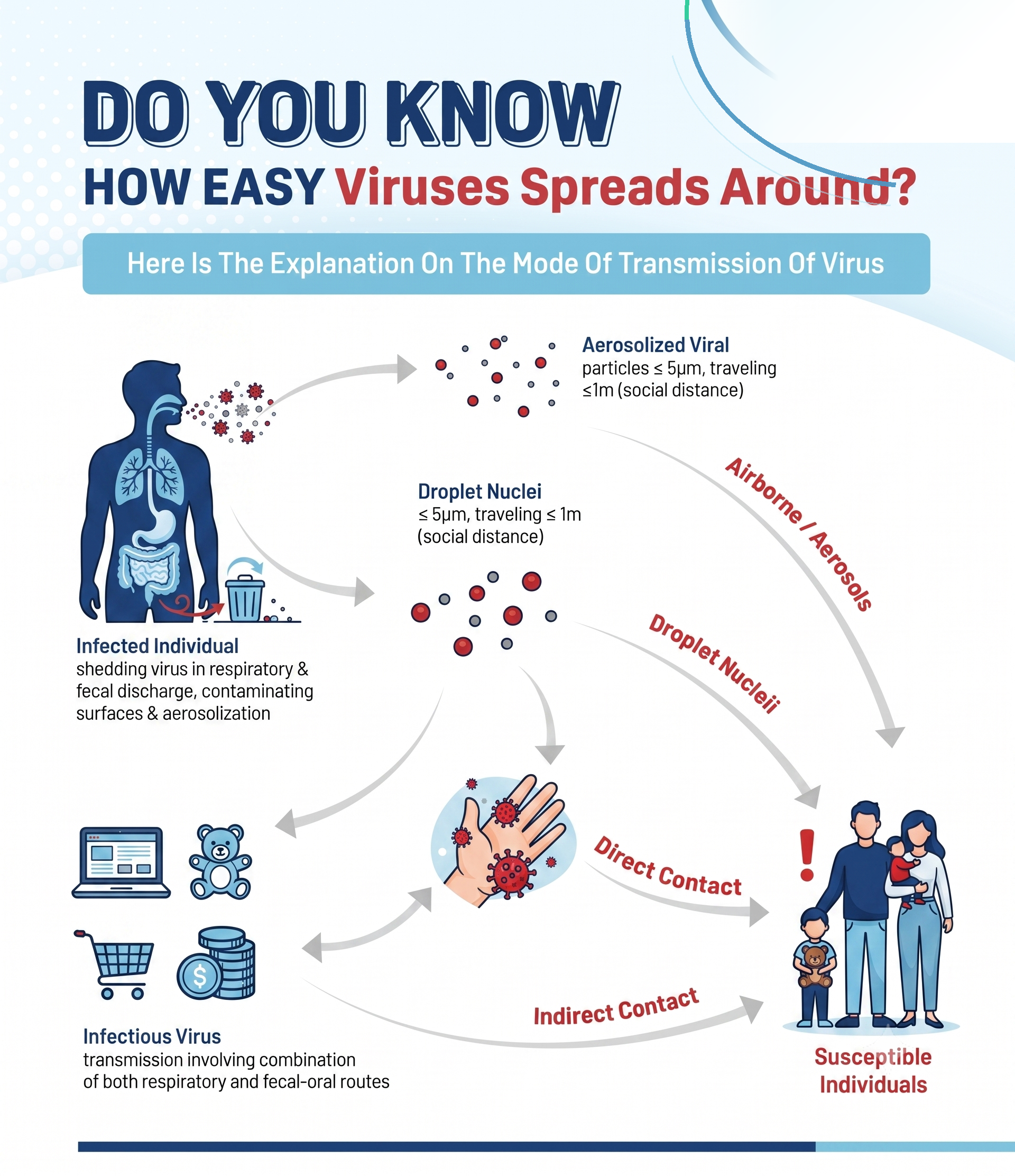
Bacteria and viruses are not the same.
This companion graphic keeps the same social-campaign visual language while clarifying the test-standard difference.
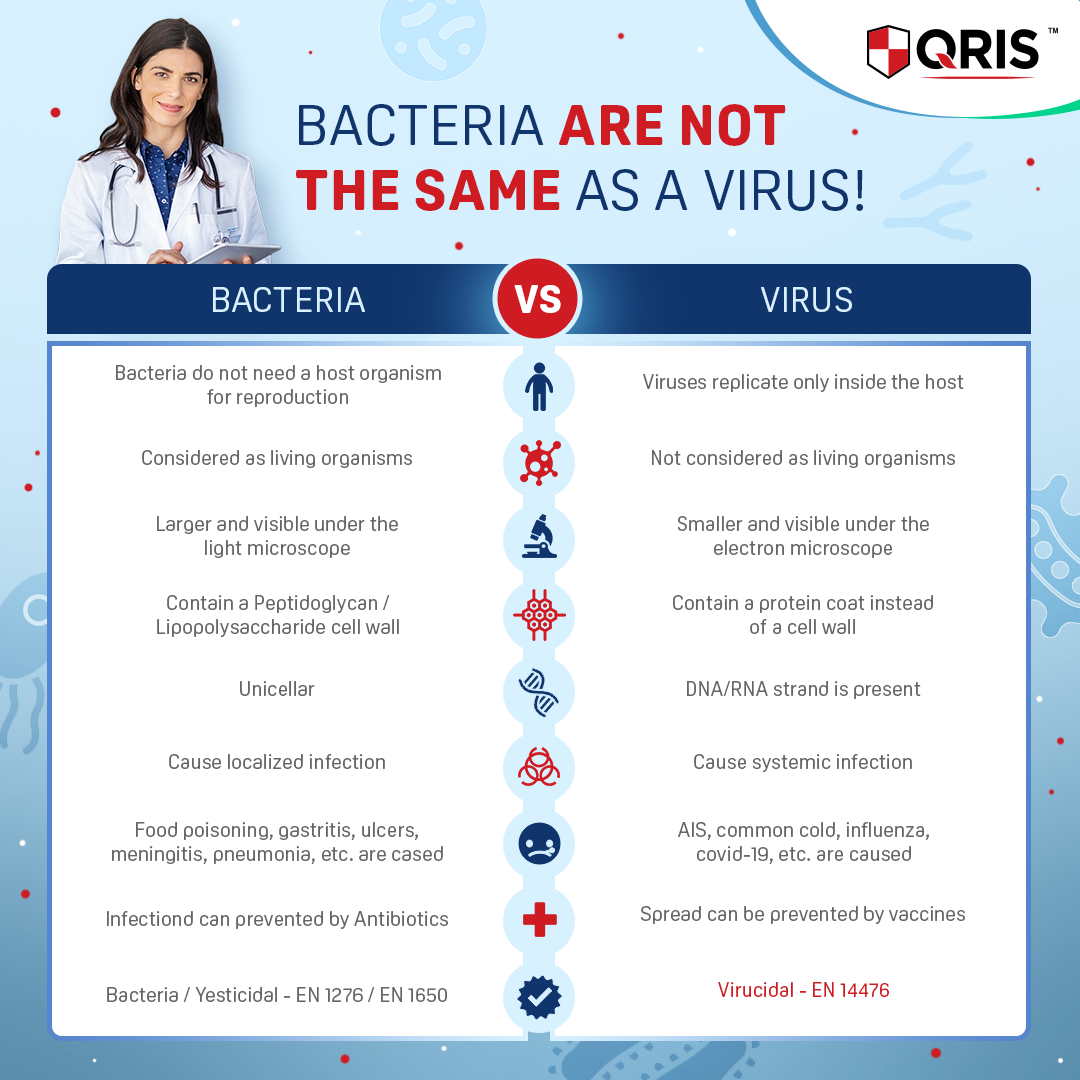
The right claim depends on the right test.
Bacteria are living single-celled organisms that can multiply independently. Viruses are particles that need a host cell, and non-enveloped viruses are much harder to inactivate.
That is why QRIS separates bactericidal/fungicidal standards from virucidal claims such as EN 14476.
| Attribute | Bacteria | Virus |
|---|---|---|
| Living status | Living single-celled organism | Not considered living outside host cells |
| Structure | Cell wall and metabolism | DNA/RNA in a protein coat or envelope |
| Control standard | EN 1276 / EN 1650 | EN 14476 virucidal testing |
| Examples | E. coli, Salmonella | Influenza, COVID-19, HFMD enteroviruses |
COVID-19, influenza, HFMD and zoonotic risk.
QRIS positions environmental hygiene as continuous prevention, not a one-time reaction to a pandemic wave.
COVID-19
Exposed the gap between SOP knowledge and daily practice.
Influenza
A recurring respiratory burden that keeps environmental control relevant.
HFMD
Enteroviruses can resist alcohol-only control, requiring true virucidal action.
Zoonotic disease
Agriculture and shared environments need monitoring and prevention.