Standards, sustainability and straight answers.
This page gathers the credibility layer from the booklet: quality policy, device standards, SDG alignment and practical safety FAQs.
The standards behind the platform.
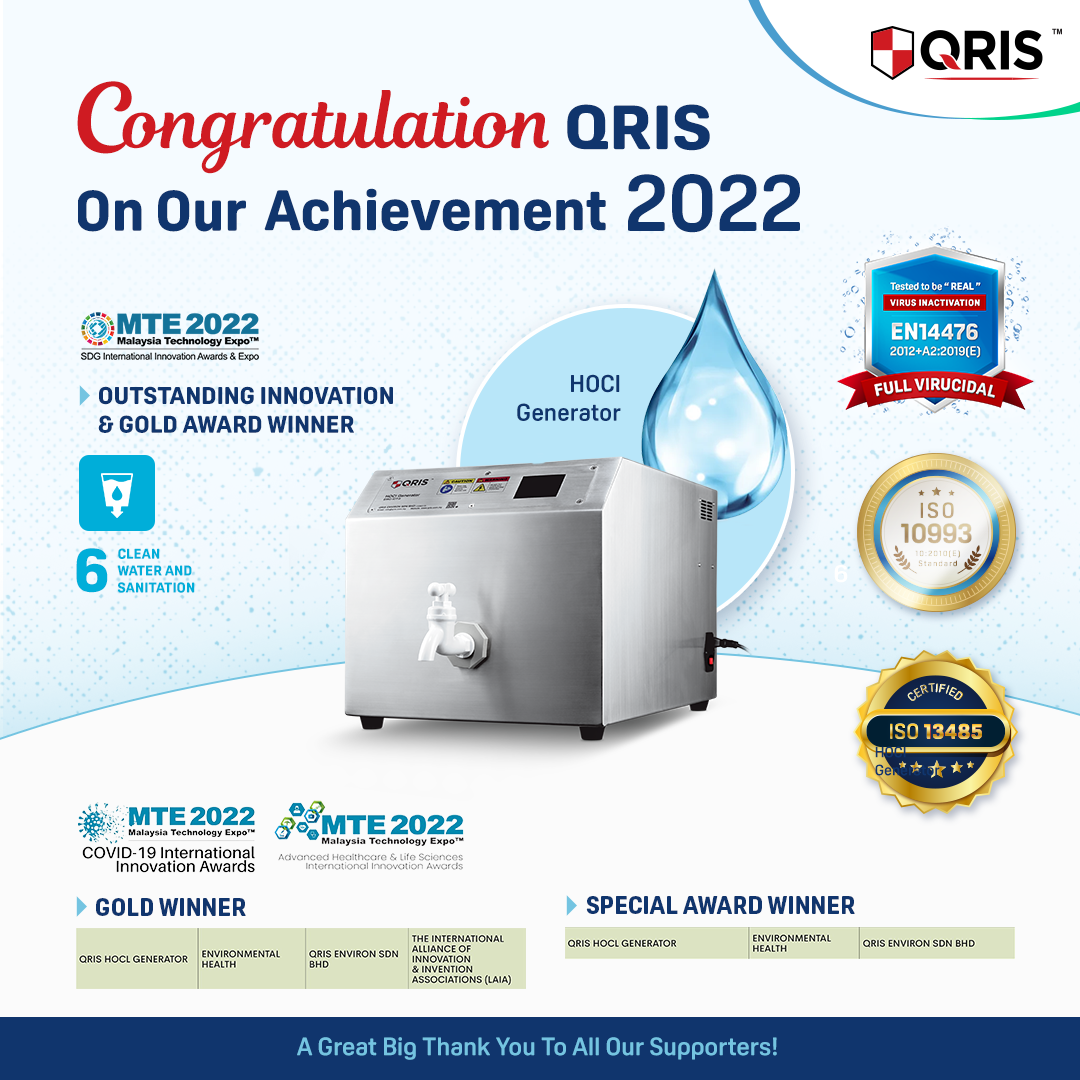
Medical-device QMS
QRIS commits to customer needs, regulatory requirements, continual improvement and effective communication for HOCl generator manufacturing and installation.
Virucidal efficacy
Testing against difficult non-enveloped viruses supports full virucidal positioning when matched to product scope.
Biocompatibility
Skin irritation evaluation supports the safety profile of the HOCl output at working concentration.
Health, water and responsible production.
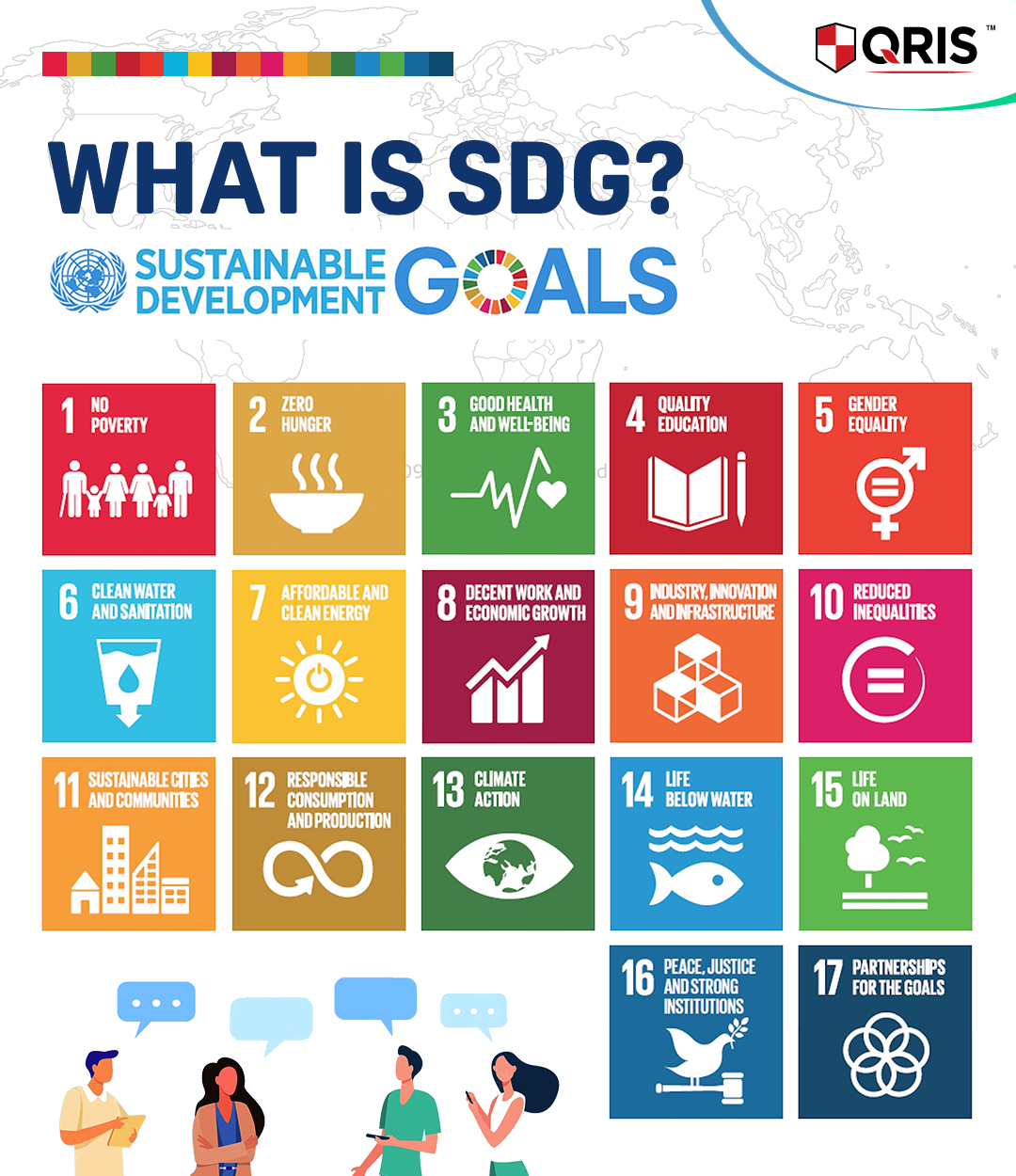
SDG 3
Good health and well-being through infection prevention.
SDG 6
Clean water and sanitation through residue-conscious disinfection.
SDG 12
Responsible production by reducing packaging, chemical storage and waste.
Common HOCl questions.
The booklet explains that alkaline HOCl/OCl- balance improves stability against UV, heat and vibration while maintaining antimicrobial effect at a pH close to the human body.
QRIS states the formula is made from salt and water without toxic additives, but it is not intended for drinking and should not be consumed in significant volume.
It shares chlorine chemistry with other disinfectants. Smell is not a reliable concentration measurement; free available chlorine should be checked with a tester or sensor.
Alcohol dehydrates skin. HOCl acts by oxidation; high concentration can still remove skin oil, but it does not dry skin in the same way as alcohol.
No. HOCl is water-based and has no flash point, unlike alcohol sanitizer.
The inputs are food-grade salt and water. The booklet notes that HOCl is categorised as a medical-device-related output and does not rely on alcohol or animal-derived ingredients.