The science of hypochlorous acid.
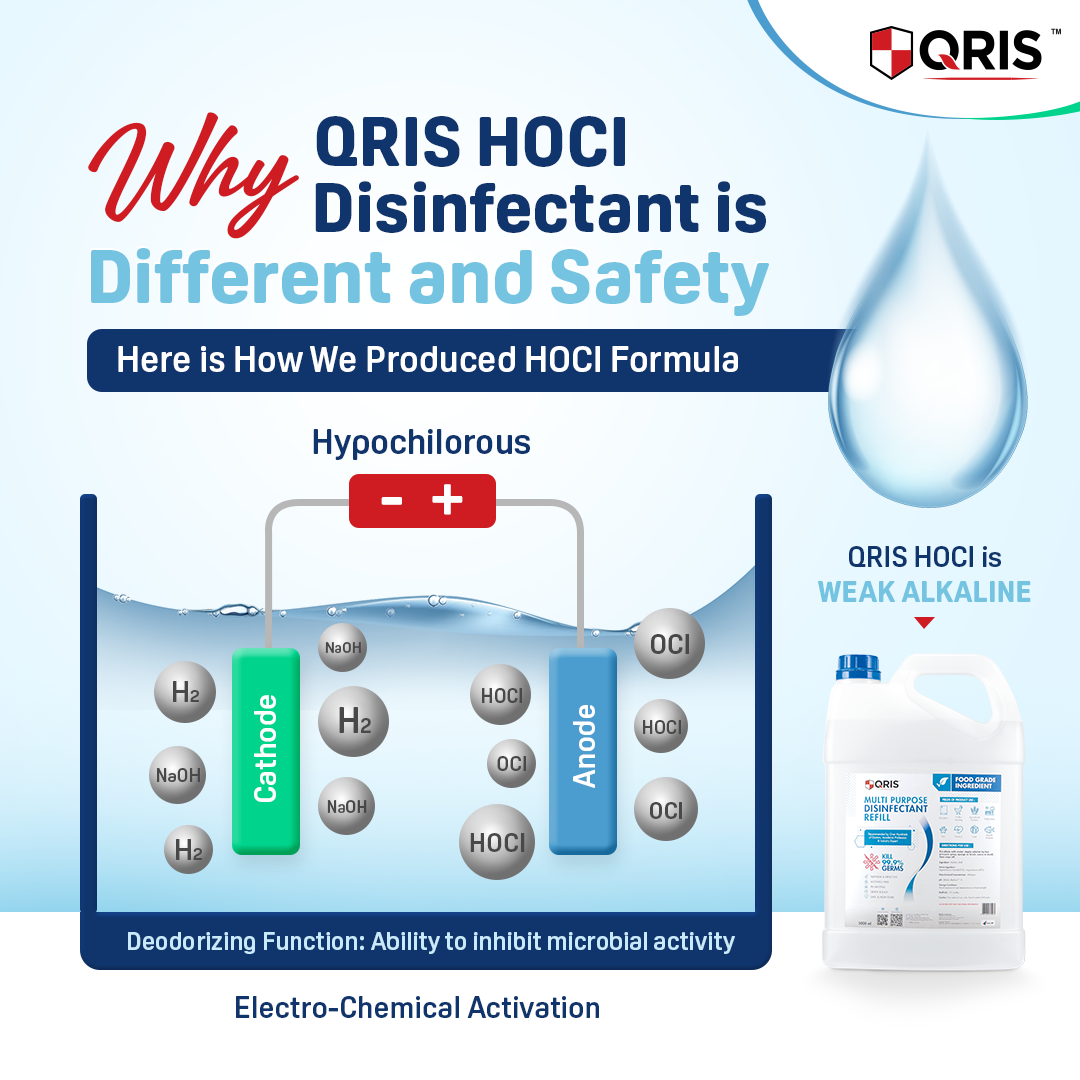
HOCl is the oxidant your white blood cells use to destroy pathogens. QRIS produces it at practical scale through electro-chemical activation.
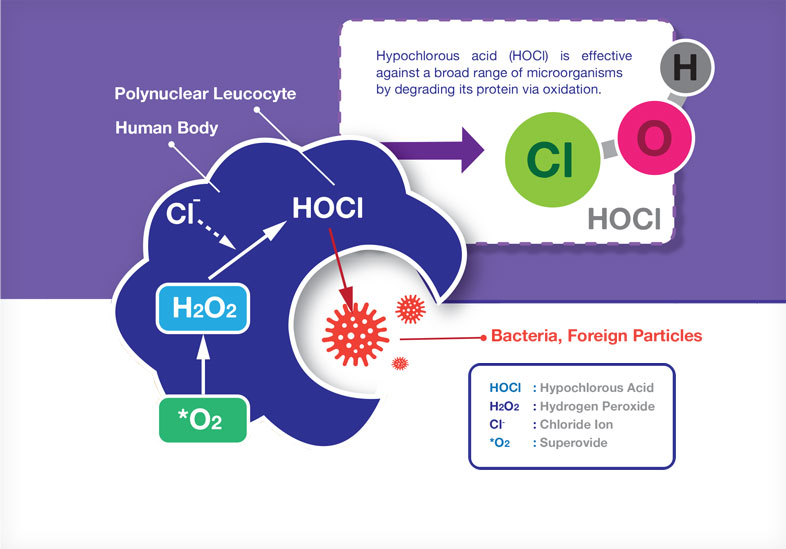
Your immune system already makes it.
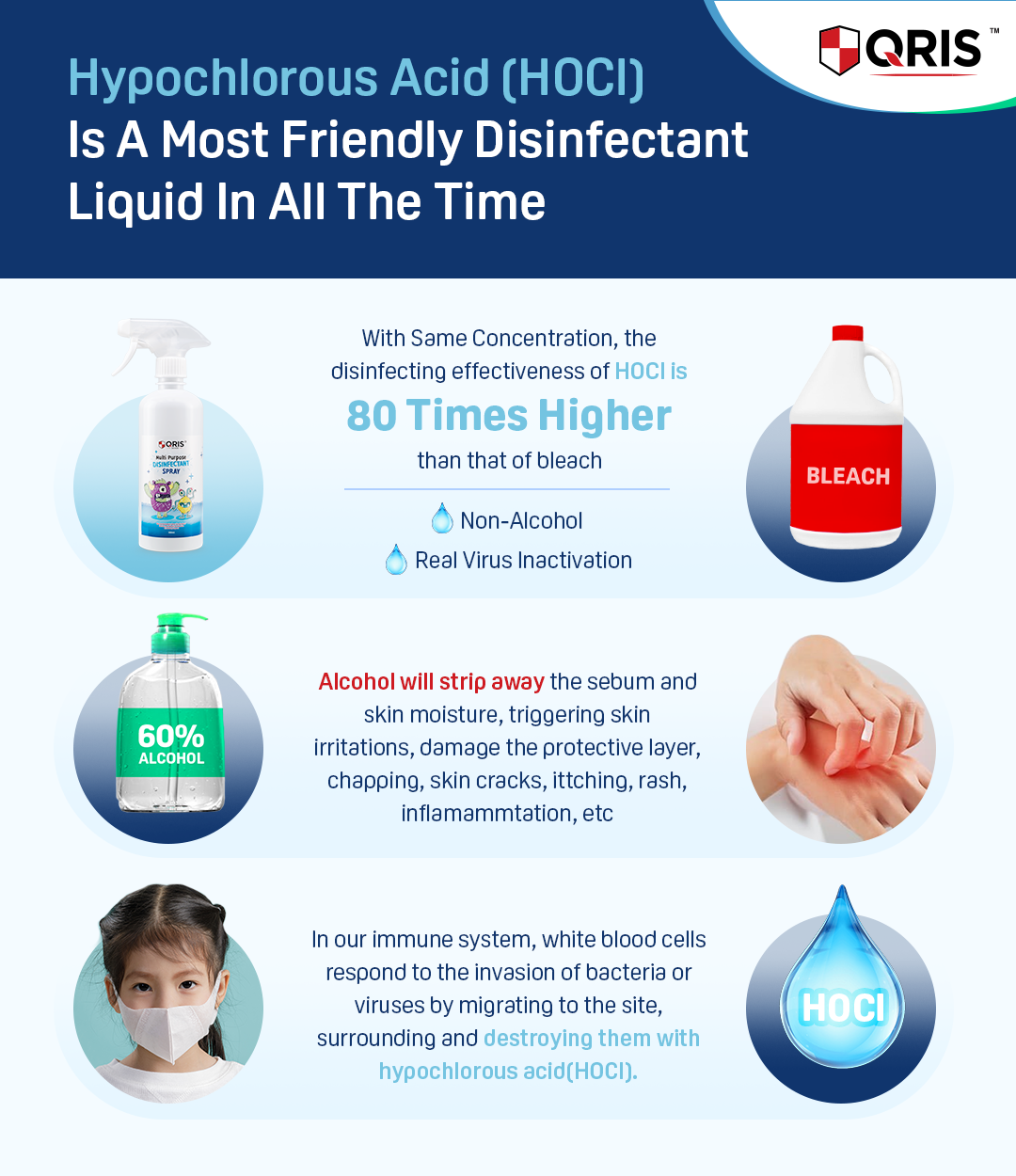
When neutrophils engulf invaders, they generate hypochlorous acid from chloride ions through myeloperoxidase. This oxidative burst damages microbial proteins, enzymes, membranes and genetic material.
QRIS production pathway
- InputsFood-grade salt + water
- ProcessNon-diaphragm electrolysis
- OutputWeak alkaline HOCl solution
- ResidueReverts toward water and trace salt
Small, neutral and fast.
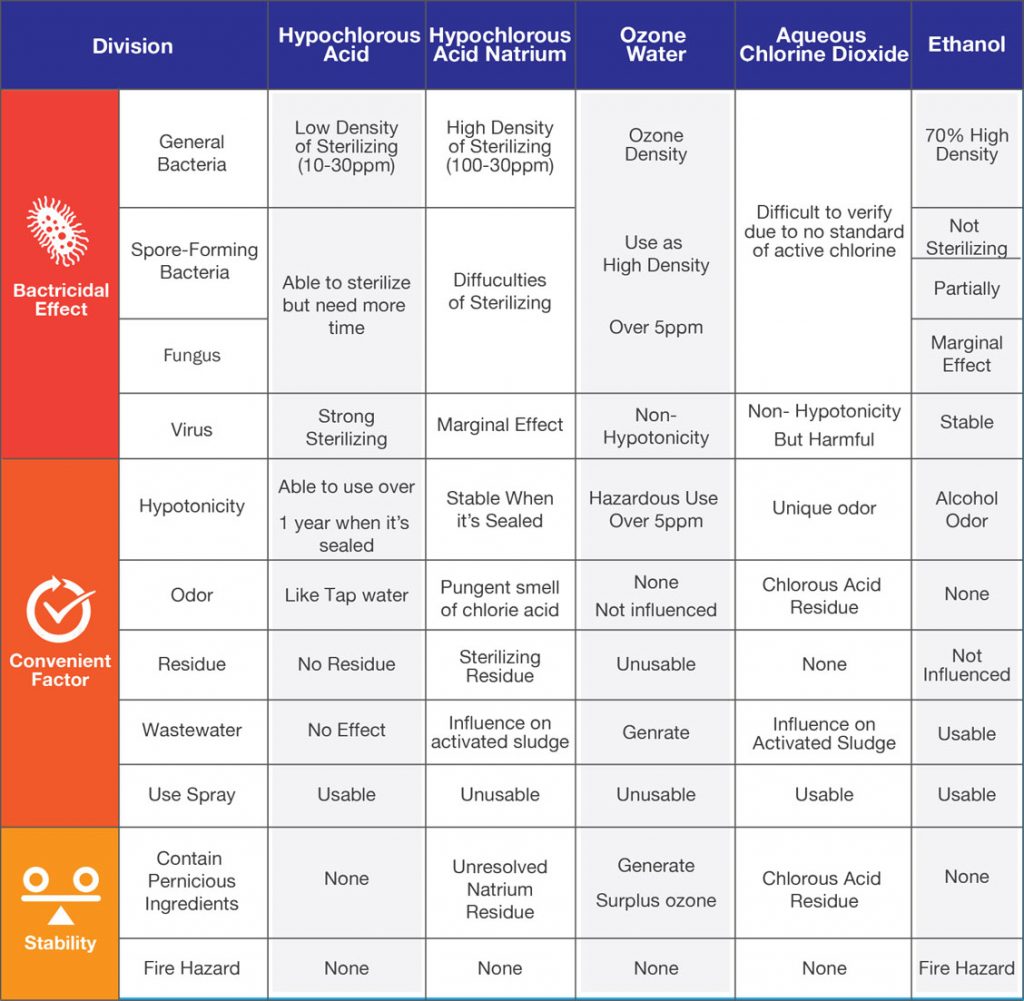
HOCl reaches microbial structures quickly and oxidises them at multiple sites, which helps explain its broad-spectrum activity.
Penetrates
The small neutral molecule crosses microbial barriers more easily than charged chlorine species.
Oxidises
Proteins, enzymes and membranes lose structure and function.
Inactivates
Bacteria, fungi and viruses are neutralised at appropriate concentration and contact time.
Converts
After reaction, the solution leaves no alcohol fire risk or bleach-like residue burden.
Food contact, surface control and medical-device discipline.
The booklet cites HOCl recognition in food-contact and environmental hygiene contexts, while QRIS frames its device manufacturing around ISO 13485 quality management.
View standards